








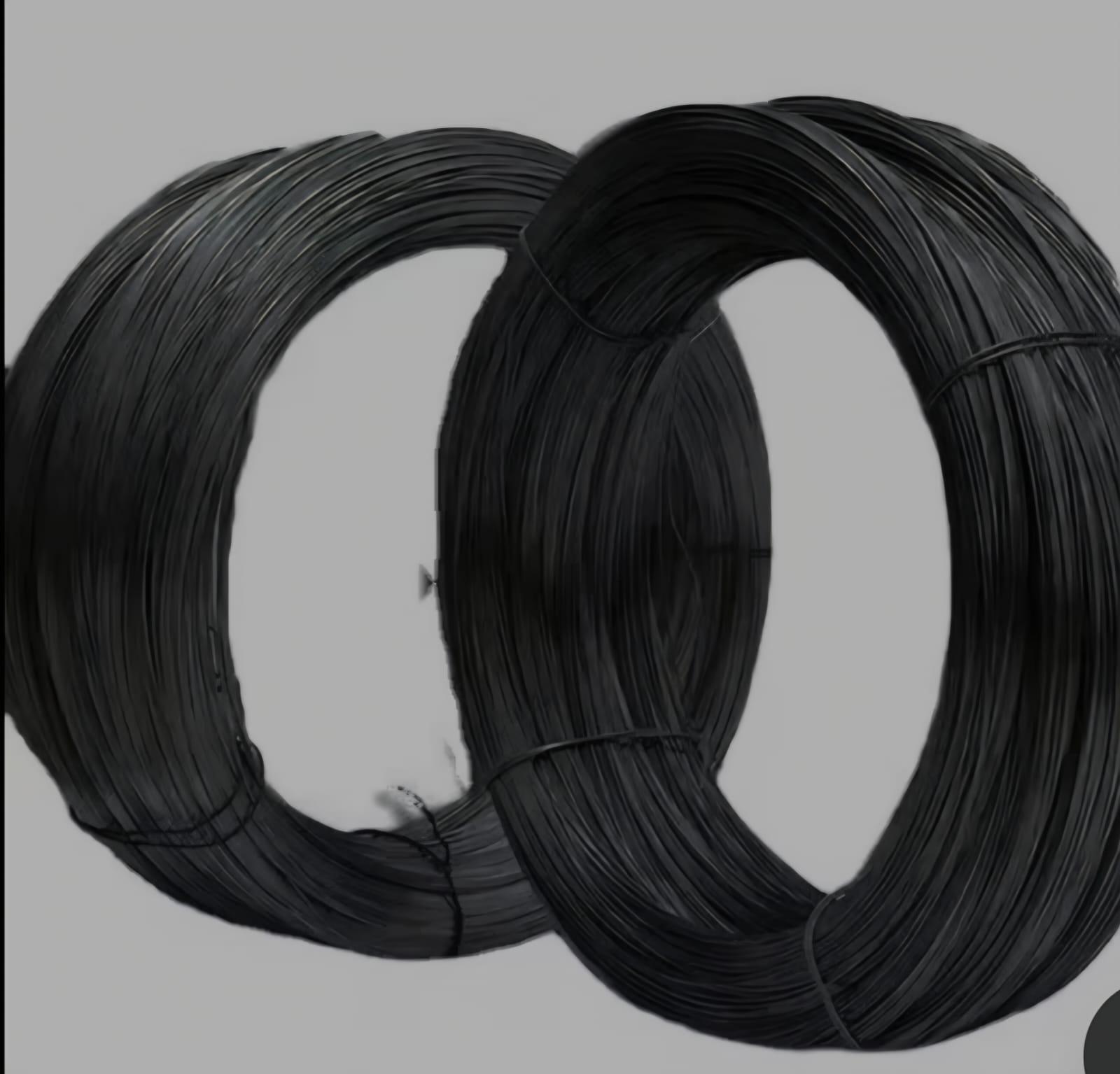
BINDING WIRES
While TMT bars are the skeleton, Binding Wire is what holds that skeleton together during the "caging" and pouring process.
Why Quality Binding Wire Matters
Poor quality wire snaps during tying or rusts prematurely, leading to structural shifts. Our wires undergo a specialized thermal annealing process in oxygen-free pits, making them exceptionally soft and flexible without losing their tensile strength.
GI & Annealed Binding Wire: The Ultimate Anchor
Precision-softened for maximum grip.
Engineered for zero-snap performance.
In any RCC (Reinforced Cement Concrete) structure, the strength of the reinforcement depends on the stability of the TMT cage. Our premium Binding Wire is designed to secure TMT intersections with maximum tightness, ensuring that the "skeleton" of your building remains perfectly aligned during the concrete pouring and vibration process.
Key Features
- Superior Softness: High ductility allows for easy twisting and multiple knots without breaking.
- High Tensile Strength: Maintains the heavy load of TMT meshes without stretching.
- Consistent Diameter: Uniform gauge (usually 18G or 20G) ensures a predictable number of ties per kilogram.
- Anti-Corrosive Coating: Available in Galvanized (GI) and Black Annealed variants to prevent rust-bleeding into the concrete.
Technical Specification
| Parameter | Specification |
|---|---|
| Material | Low Carbon Steel (Mild Steel) |
| Common Gauges | 18 SWG (1.20mm), 20 SWG (0.90mm) |
| Finish | Black Annealed / Hot-Dipped Galvanized |
| Elongation | Minimum 15% – 20% |
| Weight | 25 Kilogram (Tightly wound coils) |
| Packaging | Moisture and tamper-proof HDPE packaging. |
Applications in Construction
- TMT Lap Splicing: Securely joining two TMT bars to extend their length.
- Stirrup Fixing: Holding the "rings" (stirrups) in place around the main column bars.
- Slab Mesh Tying: Securing the intricate web of steel in floor slabs.
- Foundation Caging: Ensuring heavy-diameter bars stay positioned in deep footings.
Quality Assurance
Our binding wire is tested for torsion (twist) resistance and surface smoothness. We ensure that there are no "oily" residues on the wire that could interfere with the bond between the steel and the concrete.